The Information Your Contractor Should've Given You Before the Job Started
Most homeowners don’t know what they don’t know when it comes to insulation. This page changes that. Whether you’re trying to understand radon, compare your options, or just want to make a confident decision before inviting a crew into your home — this is where you start.
Radon Gas
Radon Gas: What It Is and Why Winnipeg Homeowners Should Pay Attention
Radon isn’t something most people think about until someone brings it up. Then it’s hard to stop thinking about it.
It’s a naturally occurring radioactive gas that forms when uranium in the soil breaks down. It moves upward through the ground and enters homes through cracks in foundations, gaps around pipes, and any unsealed opening between your home and the soil beneath it. You can’t see it. You can’t smell it. And in Manitoba, where homes are built directly on soil with naturally higher uranium content, the risk is real.
Health Canada identifies radon as the second leading cause of lung cancer in the country, behind only smoking. The good news is that it’s a completely solvable problem — but only if you know it’s there and take the right steps to address it.
How Radon Gets In
Radon enters through foundation cracks, floor-wall joints, construction gaps, gaps around service pipes, and crawl spaces with exposed soil. Older homes in Winnipeg are especially vulnerable, but this isn’t an issue that only affects older construction. Any home without proper air sealing at the foundation level is at risk.
What You Can Do About It
The first step is testing. Radon test kits are available at hardware stores and through Health Canada’s program. If your levels come back elevated — Health Canada’s action level is 200 Bq/m³ — mitigation is the next step.
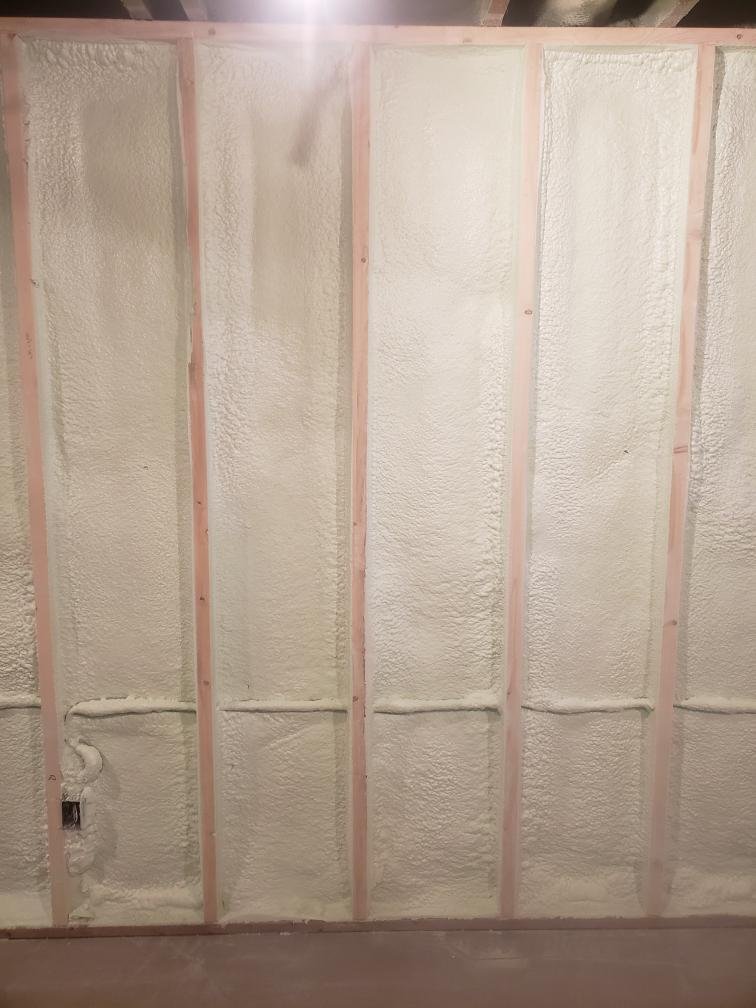
Spray foam insulation applied at the foundation, rim joists, and any penetration points is one of the most effective ways to seal radon entry points before they become a problem. It’s not a replacement for a full radon mitigation system in severe cases, but it’s a meaningful and proven part of the solution for most homes.
If you’re already thinking about insulation, you’re already thinking about the right thing.
Core
Fibreglass vs Spray Foam: An Honest Comparison
We’re not going to pretend this is a neutral comparison. We use spray foam because we believe it’s the right product for Manitoba’s climate. But we also believe you deserve to understand exactly why, so here it is straight.
Fibreglass Batt Insulation Fibreglass is the pink or yellow fluffy stuff you’ve probably seen in attics and walls. It’s been the standard for decades because it’s inexpensive and easy to install. It does insulate — but only against heat transfer through conduction. It does nothing to stop air movement.
That’s the problem.
In Manitoba winters, where temperatures can drop to -30°C and below, air leakage is responsible for a significant portion of your home’s heat loss. Fibreglass lets air pass right through it. So you can have perfectly installed fibreglass insulation and still have a drafty, inefficient home because the air is moving around it, through gaps it was never designed to address.
Spray Foam Insulation Spray foam expands on contact and fills every gap, crack, and void it touches. Closed-cell spray foam in particular creates an airtight, vapour-resistant barrier that insulates and seals at the same time. It doesn’t sag, shift, or compress over time. It doesn’t absorb moisture. And it performs consistently whether it’s -30°C outside or +30°C.
Side by Side
The Bottom Line
| Fibreglass Batt | Closed-Cell Spray Foam | |
|---|---|---|
| Air sealing | ✕ No | ✓ Yes |
| Moisture resistance | ✕ No | ✓ Yes |
| R-value per inch | ~R-3.5 | ~R-6 to R-7 |
| Settles over time | ✕ Yes | ✓ No |
| Pest resistance | ✕ No | ✓ Yes |
| Lifespan | 15–20 years | 80+ years |
| Upfront cost | Lower | Higher |
| Long-term value | Lower | Higher |
Fibreglass is cheaper on day one. Spray foam is cheaper over the life of your home.
Is Your Home Protecting You From Radon?
Radon is the second leading cause of lung cancer in Canada. It enters homes silently — through foundation cracks, pipe gaps, and unsealed openings in your floor system. Most homeowners have no idea it’s there.
Here’s what you should know:
Know Your Numbers
Health Canada's action level is 200 Bq/m³ — many Manitoba homes exceed it
Easy to Test
Testing is simple, inexpensive, and can be done by any homeowner
Seal the Entry Points
Sealing foundation entry points with spray foam is one of the most effective first-line defences
Free With Every Assessment
Consectetur adipisicing elit, sed do eiusmod tempor incididunt ut.
Technical Documents
We’re not the kind of company that hides behind vague claims. If you want to understand the products we use, the standards we work to, and the science behind what we do — here it is
-
The Details, If You Want Them
We're not the kind of company that hides behind vague claims. If you want to understand the products we use, the standards we work to, and the science behind what we do — here it is.
-
Closed-Cell Spray Foam — Product Spec Sheet
Technical specifications for the closed-cell foam we use, including R-value per inch, vapour permeability, compressive strength, and application temperature ranges.
-
Radon Entry Points — Reference Guide
A visual reference showing the most common radon entry points in Manitoba homes and how spray foam addresses each one.
-
Manitoba Building Code — Insulation Requirements
A plain-language summary of current insulation requirements for residential construction in Manitoba, including minimum R-values by zone.
-
Spray Foam vs Fibreglass
The full breakdown of how closed-cell spray foam and fibreglass batt insulation compare across every performance metric that matters for Winnipeg homes.
All documents are provided for reference. Have questions about what applies to your home? Just ask.
Radon Gas
If You Own the Home, This Section Is for You
Whether you’re dealing with a drafty rental unit, preparing a property for sale, or just trying to make a home you’ve owned for twenty years finally feel the way it should — this is the part that matters to you.
Your home is losing money every month it’s under-insulated. It doesn’t show up on a single bill as one line item, but it’s there: in the heating costs that seem high no matter what you do, in the maintenance calls that keep coming back, in the moisture and mould issues that never quite go away. Proper insulation — done right, with the right product — fixes the root cause instead of patching the symptoms.
What to expect when you call Foam Daddy: We come to your property, assess what’s there and what’s not, and give you a clear picture of what needs to be done and what it’ll cost. No inflated estimates. No vague scopes of work. Just honest numbers from a crew that knows what they’re looking at.
Common situations we help property owners with:
- Rental properties with tenant comfort complaints and high utility costs
- Homes being listed for sale where insulation upgrades improve value and buyer confidence
- Older properties where the original insulation is past its useful life
- New builds where the builder’s standard insulation package isn’t enough for Manitoba winters
- Commercial or mixed-use properties that need code-compliant insulation on a schedule
A note on radon for property owners: If you’re renting your property, radon testing and mitigation isn’t just the right thing to do — it’s increasingly becoming a legal and disclosure obligation. Spray foam insulation at the foundation level is a meaningful and documentable step toward radon reduction that protects your tenants and your liability.
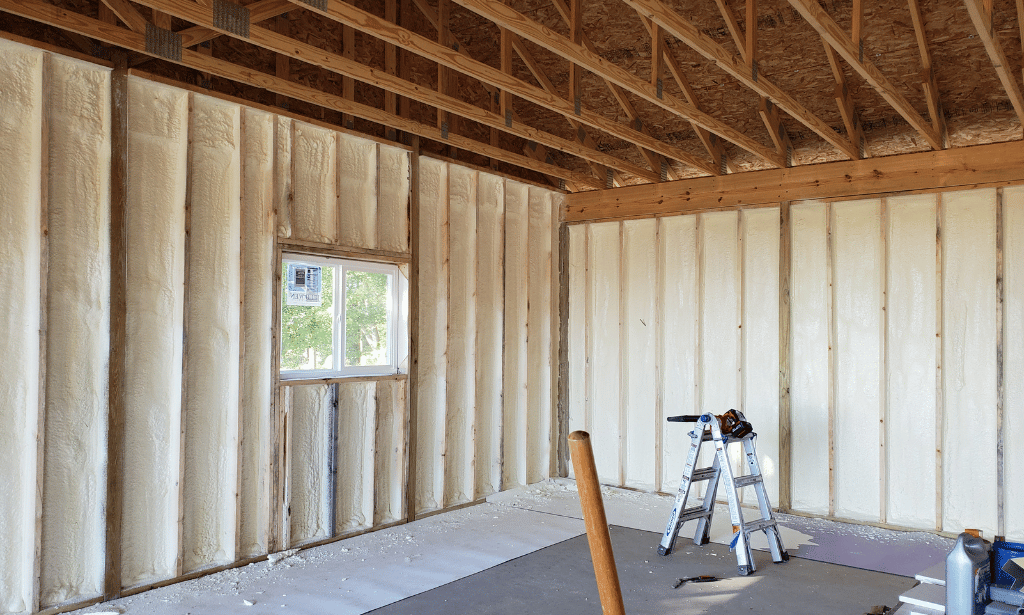
Spray foam insulation applied at the foundation, rim joists, and any penetration points is one of the most effective ways to seal radon entry points before they become a problem. It’s not a replacement for a full radon mitigation system in severe cases, but it’s a meaningful and proven part of the solution for most homes.
If you’re already thinking about insulation, you’re already thinking about the right thing.
You Asked Good Questions. Now Let's Get You Real Answers.
The best next step is a conversation with someone who’s actually been in hundreds of Southern Manitoba homes and knows what they’re looking at. That’s us.